The cost of vigilance
For a long time, I operated under a specific kind of digital pressure that I’ve come to think of as “an iron fist closing around my heart.” It’s a literal physical sensation — a tightening of the chest — that arises when you feel the pressure to deliver while struggling to wield your focus, because you are in a persistent mental fog. For years, I assumed this was just the price of ambition. I thought that if I felt overwhelmed, the only answer was to tighten the screws on my own discipline and try harder.
But I've come to realize that this feeling wasn't a personal failure; it was a response to an environment. Even in a supportive workplace, the default architecture of modern work — fast Slack responses, complex project management suites, and the “Always-On” expectation — is fundamentally designed to fragment our attention. Your brain enters a state of hyper-vigilance. You aren't just working; you are scanning for threats.
Now, as I build the Soft Hustle Life, I’ve had to confront an uncomfortable truth: even when you are your own boss, those habits of vigilance remain. You can still send yourself back into that foggy state if you don't set deliberate limits. In my search for a Calmer Tool Stack, I decided to do a seven-day digital reset as an experiment. My hypothesis was simple: If I ruthlessly minimize digital input and friction, can I move my baseline from being vigilant back to having momentum?
The low-static protocol
This wasn’t a digital detox in the sense where I ran away from technology. Instead, it was a deliberate pruning of the quiet drains that fragment my attention. I focused on four specific areas:
1. The attention funnel (hard stops)
Platforms like YouTube and Netflix are rigged. Even if you log on with a specific intent such as uploading a video, the interface is designed to pull you into a consumption funnel for an hour before you remember why you opened the app. What is worse, scrolling behavior, like gaming, gives many small spikes of dopamine in your brain — your motivation hormone — which lowers your dopamine baseline over time. This ruins your focus and makes daily tasks more boring and harder than they should be.
2. The communication buffer (sync to async)
The tap on the digital shoulder is the enemy of the Soft Hustle. Constant interruption and the demand to be always available slows your productivity. The goal is to break the habit of performing availability and instead reclaim the right to own my schedule.
3. Tool downgrading (the friction paradox)
I’ve noticed that the more features a tool has, the higher the cognitive load. In my case, I frequently use Google Workspace and Notion. While there is nothing inherently wrong with these tools, I noticed that they are not the right tools to get up to speed with writing. There are buttons to distract me, features that send me into planning mode, formatting issues to obsess over before the text is written, and there may be lag.
4. The visual reset
We underestimate the weight of digital clutter. Closing those tabs that you should return to somewhere this week signals to the brain that the emergency of the previous task is officially over.
The invisible assistant: passive tracking
One of my biggest sources of background anxiety has always been time blindness — the mystery of where the day went. In the past, the demand of estimating tasks and manually tracking time to improve my estimates only added more friction.
As part of this reset, I leaned into a custom Linux service I wrote that silently logs my laptop activity to a Google Sheet. It is an invisible assistant that tells me where my energy went with shocking accuracy without me having to lift a finger. The relief was instant and lasting.
For the non-technical reader, the principle remains the same: Find ways to track your reality that require zero willpower.
Measuring the effects
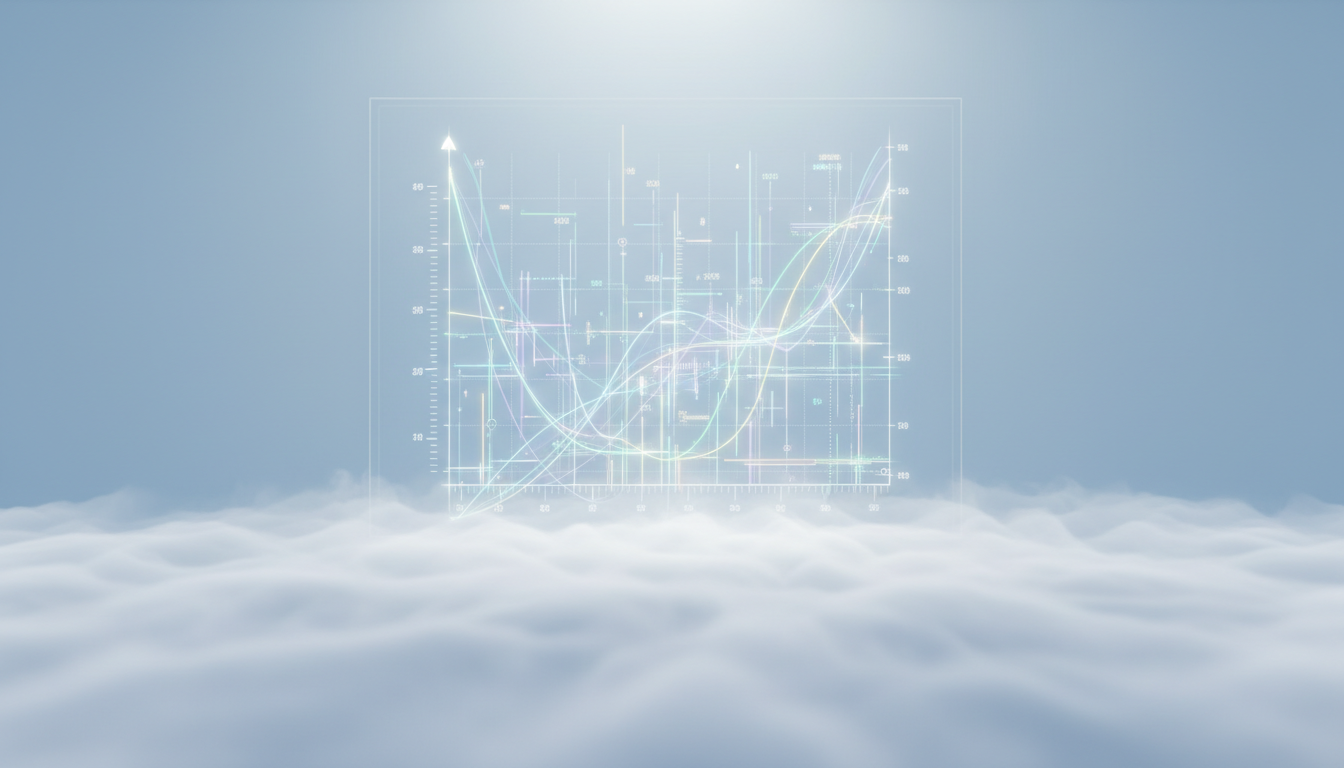
To see if this protocol worked, I used a Subjective Momentum Scale (1–10). In this scale, a 10 represents total clarity, high creative output, and a calm nervous system. A 1 represents the “heart squeeze” feeling: total fragmentation, high vigilance, and zero progress.
- Vigilance Level: 1 = High alert, 10 = Calm.
- Cognitive Load: 1 = 50-tab fog, 10 = Clear head.
- Creative Output: 1 = Reactive noise, 10 = Meaningful output.
Looking back at my old ways of working, I was frequently living at a 2/10. I was busy, but I had almost no momentum. During this 7-day reset, by enforcing the low-static protocol rules I was able to maintain a steady 8/10.
The new baseline: what earned its way back?
The aim of a reset shouldn’t be a permanent retreat from the world. It’s about discovering what earns its way back into your life.
I learned that I don’t miss tool bloat. Moving forward, I am keeping the Markdown-first writing workflow and the strict communication buffer. The hardest part for me was to stay away from YouTube. While I can’t avoid the platform forever, I did notice that I was starting to feel less restlessness and more fulfilment in the second half of the reset week. It is good to know that when I open the app, I pay with my peace.
In my next article, I’ll be diving into the math of the hustle: how to calculate your true hourly rate and the hidden tax we pay for our fragmentation.